
Farming is hard work, and in a district like Yavatmal the fields put your eyes through a lot. Dust during ploughing, pesticide spray drifting into your face, a thorn poking through while clearing shrub, hours of harsh sun — none of these seem like eye emergencies at the time, but they add up. Eye safety for farmers is something we talk about in our clinic almost every day, because the injuries we see are nearly always ones that simple precautions could have stopped. This guide covers the risks, the protection, and the first aid that matters.
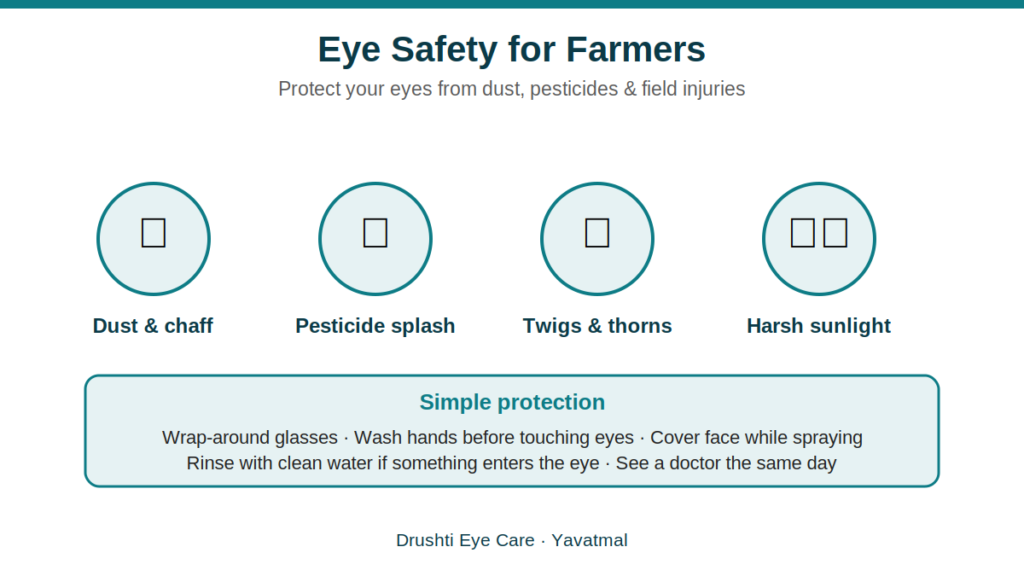
The four big risks in the field
1. Dust and chaff
This is the most common trouble. Threshing, winnowing and even walking behind a tractor throw fine particles into the air. A tiny grain of chaff lodges under the eyelid, and the natural response is to rub. Rubbing pushes the particle deeper and can scratch the cornea, the clear front window of the eye. A corneal scratch is painful, waters a lot, and opens the door to infection if dirt gets in.
2. Pesticide and chemical splash
Spraying pesticide without face cover is common across Vidarbha, and the splash can burn the surface of the eye in seconds. Some chemicals cause damage that worsens over hours even after the initial sting fades. This is the one field injury where speed of first aid matters more than anything else.
3. Twigs, thorns and flying fragments
Clearing bushes, cutting sugarcane, hammering metal around the farm — these send small sharp pieces toward the eyes without warning. A thorn scratch or a metal fragment lodged in the cornea needs a doctor, not a home remedy.
4. Years of harsh sunlight
This one does not hurt today, but it collects. Farmers who spend decades under open sun without eye cover face a higher risk of early cataracts and growths on the white of the eye called pterygia. The World Health Organisation lists UV exposure as a risk factor for several eye conditions.
Simple protection that actually works
Expensive gear is not the answer here, because nobody will wear it through a long day in the heat. What works is simple and cheap:
- Wrap-around glasses or even a sturdy pair of sunglasses stop most dust, chaff and UV. They cost very little and they last.
- A cloth or mask over your nose and mouth while spraying pesticide keeps spray from drifting upward into the eyes.
- Wash your hands with clean water before you touch your face or eyes after handling chemicals.
- Keep a bottle of clean water in the field for quick rinsing if something enters the eye.
None of this slows you down. And any one of these habits can save you a painful trip to the hospital.
First aid: what to do when something goes wrong
Dust or a small particle enters the eye: Do not rub. Blink several times and let the tears wash it out. If it stays, rinse with clean water. Splash gently, do not force it. If it still feels stuck or your vision blurs, come in the same day.
Pesticide or chemical splash: Rinse the eye immediately with clean water for at least 10 to 15 minutes. Hold the eyelids open and pour water steadily across the eye. Do not wait for the sting to pass. Then come to the hospital — even if it feels better after rinsing, because some chemicals cause delayed damage.
A thorn, twig or metal fragment hits the eye: Do not try to pull it out yourself. Do not rub or press. Cover the eye gently with a clean cloth and come in as quickly as you can.
When is it an emergency
Some injuries cannot wait until morning. Come in the same day if you have:
- A chemical splash, however small
- A sharp object stuck in or near the eye
- Sudden blurred or lost vision after any injury
- Severe pain that does not ease with rinsing
- Blood visible inside the eye
The long game: yearly checks for working eyes
Field injuries are the dramatic part, but the quieter risk is the one that builds over years: UV-linked cataracts, unnoticed glaucoma, and diabetic changes in the retina. An annual eye check catches these while they are still easy to manage. Farming depends on your eyes. Protecting them deserves five minutes a year.
Why farming families trust Drushti Eye Care
Over the last 15 years we have looked after more than 10,000 patients, many of them farming families from Yavatmal and nearby towns like Wani, Pusad, Pandharkawda and Darwha. Dr. Subodh Purohit and our team handle both emergencies and routine checks under one roof, with the equipment to deal with foreign-body removal, corneal injuries and chemical burns on the spot.
Eye injury on the farm? Do not wait.
Rinse with clean water, then come in the same day.
Call or WhatsApp: [Clinic Phone Number]
Drushti Eye Care, [Clinic Address], Yavatmal · Contact us
Frequently asked questions
What should I do if pesticide gets into my eye?
Rinse the eye with clean water immediately, holding the lids open, for at least 10 to 15 minutes. Then see a doctor the same day, even if it feels better, because some chemicals cause delayed damage.
How do I remove dust or a foreign particle from my eye safely?
Do not rub. Blink several times to let tears wash it out, or rinse with clean water. If it stays stuck or your vision blurs, see a doctor.
Can sunlight damage a farmer’s eyes?
Yes. Years of open-sun exposure raise the risk of early cataracts and surface growths on the eye. Simple wrap-around sunglasses reduce this risk a a lot.
What glasses protect against farm dust?
Wrap-around glasses or sturdy sunglasses that sit close to the face work well. They do not need to be expensive, just snug enough to block dust from the sides.
When is an eye injury an emergency?
Any chemical splash, a sharp object in or near the eye, sudden vision loss, severe pain that will not ease, or visible blood inside the eye — these need a doctor the same day.