
Glaucoma has earned a grim nickname: the silent thief of sight. It takes vision so slowly and so quietly that most people never feel it happening, until a large part of their side vision has already gone. That is exactly why glaucoma treatment in Yavatmal so often begins too late, when someone finally notices they keep bumping into doorframes or missing a step. The frustrating part is that a simple, painless test could have caught it years earlier. Here is what glaucoma is, who should pay attention, and why one yearly check matters so much.
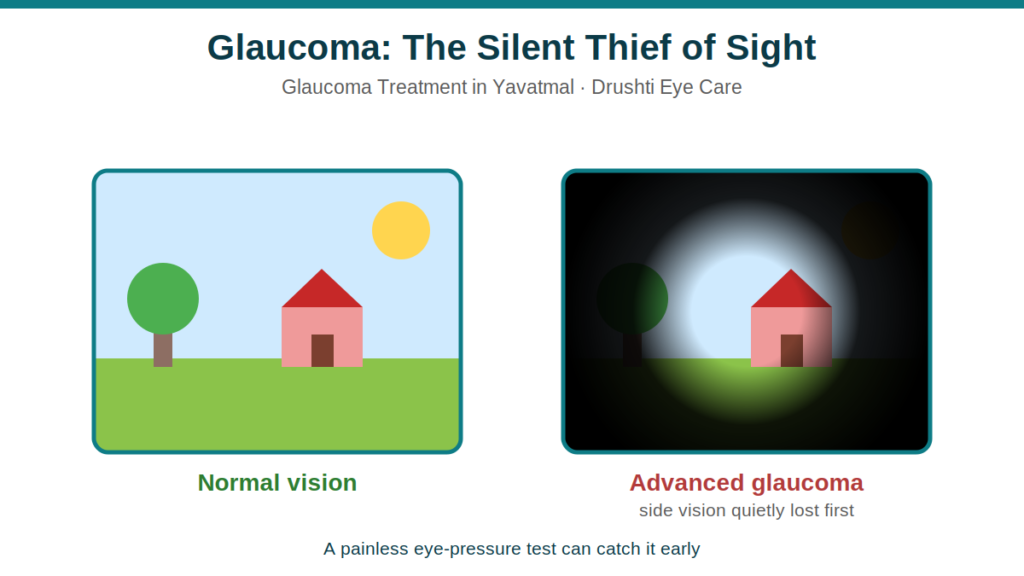
What glaucoma actually is
Inside your eye, a clear fluid is always being made and drained, and that balance keeps the eye firm and healthy. In glaucoma, the drainage slows down, so pressure builds up. Over time, this raised pressure presses on the optic nerve, the cable that carries pictures from your eye to your brain. Once nerve fibres in that cable die, they do not grow back. That is the hard truth about glaucoma, and the reason early detection counts for so much.
Why they call it the silent thief
Here is the cruel trick. Glaucoma takes your side vision first, not your central vision. So you still see faces and read your phone perfectly well, while the edges of your world quietly shrink. Your two eyes also cover for each other, and your brain fills in the gaps, so nothing looks obviously wrong. By the time the damage reaches your central vision, a great deal is already lost. In most cases there is no pain and no redness to warn you at all.
Who is most at risk
- Anyone over 40, with the risk rising each decade
- People whose parent, brother or sister has glaucoma
- People with diabetes or high blood pressure
- A high minus (short-sighted) glasses number
- Long-term use of steroid drops or tablets
- A past eye injury
If two or more of these apply to you, do not wait for symptoms. There will not be any early ones worth waiting for.
The simple tests we use
Checking for glaucoma is quick, painless, and needs no needle. We measure your eye pressure with a non-contact tonometer, a machine that uses a soft puff of air, so nothing touches the eye. We look directly at the optic nerve. And where needed, an automated perimetry test maps your field of vision and reveals blind spots you cannot feel on your own. Together these pick up glaucoma long before you would ever notice it yourself.
Glaucoma treatment in Yavatmal, and what it can do
Here is the honest picture. We cannot bring back sight that glaucoma has already taken. What we can do, and do well, is stop it from taking any more. Most people are managed with eye drops that lower the pressure, used every day for life. Some do well with a quick laser treatment, and a few need surgery to improve the drainage. The goal of glaucoma treatment in Yavatmal is simple: protect the vision you still have, for the rest of your life. Caught early, most people keep useful sight for good. The National Eye Institute makes the same point about early detection.
What you should do
If you are over 40, book an eye-pressure and optic-nerve check once a year, even when your sight feels perfect. If glaucoma runs in your family, start sooner and stay stricter about it. And if you are already on glaucoma drops, use them exactly as prescribed and never stop on your own, because the pressure climbs straight back the moment you do.
Why families trust Drushti Eye Care
Over the last 15 years we have looked after more than 10,000 patients, with eye-pressure testing, optic-nerve checks and automated perimetry all under one roof, and care led by Dr. Subodh Purohit. People come in from Yavatmal and nearby towns such as Wani, Pusad, Pandharkawda and Darwha for exactly this kind of quiet, early check, the one that protects sight before anything feels wrong.
Over 40, or is glaucoma in your family?
A five-minute pressure check today could protect your sight for decades.
Call or WhatsApp: 94229 22429
Drushti Eye Care, State Bank Chowk Rd, in front of Timber Bhavan, Dhamangaon Road, Pangari, Yavatmal, Maharashtra 445001· Contact us
Frequently asked questions
What are the early signs of glaucoma?
Usually there are none, and that is the danger. Most common glaucoma has no pain or blurring early on. It is found on a check-up, not by how your eyes feel.
Is the eye-pressure test painful?
No. The common test uses a soft puff of air and does not touch the eye. It takes only a few seconds.
Can glaucoma be cured?
There is no cure, but it can be controlled well. We cannot restore lost sight, yet we can stop further loss with drops, laser or surgery.
Who is at risk of glaucoma?
People over 40, anyone with glaucoma in the family, diabetics, those with a high short-sighted number, long-term steroid users, and anyone with a past eye injury.
How often should I check my eye pressure?
Once a year after 40, and sooner or more often if glaucoma runs in your family or you have other risk factors.