
Have you ever experienced blurry eyesight while reading, difficulty focusing on your phone, or frequent headaches after working on a computer?
Many people ignore these symptoms, assuming they are caused by tiredness, stress, or too much screen time. While some vision problems are related to temporary eye strain, others may indicate an underlying eye condition that needs medical attention.
Understanding blurry vision causes can help you recognize when your eyes need professional care.
At Drushti Eye Care, Yavatmal, we believe that recognizing eye problems early is an important step toward protecting your vision and maintaining long-term eye health.
What Is Blurry Vision?
Blurry vision occurs when objects appear unclear, hazy, or out of focus. It may affect one eye or both eyes and can develop gradually or suddenly.
You may notice symptoms such as:
- Difficulty reading small letters or text on your mobile phone.
- Trouble seeing distant objects clearly.
- Blurry eyesight while driving, especially at night.
- Frequent squinting to focus on objects.
- Eye strain or headaches after reading.
- Difficulty recognizing faces or seeing fine details.
Sometimes, blurry vision can be corrected with glasses or contact lenses. However, persistent or sudden changes in vision should never be ignored.
Common Causes of Blurry Vision
There are several possible reasons for blurry eyesight. Some are relatively common, while others require prompt diagnosis and treatment.
1. Refractive Errors: Myopia, Hyperopia and Astigmatism
Refractive errors are among the most common blurry vision causes.
These occur when light entering the eye does not focus correctly on the retina.
The common types include:
- Myopia (Nearsightedness): Distant objects appear blurry, while nearby objects may remain clear.
- Hyperopia (Farsightedness): Nearby objects may be harder to focus on, although symptoms vary.
- Astigmatism: Objects may appear blurry or distorted at different distances.
- Presbyopia: An age-related change that makes focusing on nearby objects difficult, usually becoming noticeable after age 40.
An eye examination can determine whether you need glasses, contact lenses, or another appropriate vision correction option.
2. Digital Eye Strain and Excessive Screen Time
Spending long hours using smartphones, computers, and tablets can contribute to digital eye strain.
When concentrating on screens, people tend to blink less frequently. This can affect the tear film and contribute to dryness or temporary blurred vision.
Common symptoms include:
- Tired or heavy eyes.
- Burning or itching sensations.
- Temporary blurry eyesight.
- Difficulty focusing after prolonged screen use.
- Headaches after computer work.
Eye care tip: Follow the 20-20-20 rule. Every 20 minutes, look at something approximately 20 feet away for at least 20 seconds.
This can help relax your focusing effort, although it does not replace medical care for persistent symptoms.
3. Dry Eye Disease
Dry eye disease develops when the eyes do not produce enough tears or when the tear film does not function properly.
It may cause:
- Burning or stinging eyes.
- A gritty sensation, as though something is inside the eye.
- Fluctuating or blurry vision.
- Redness or discomfort.
- Excessive watering caused by irritation.
Air conditioning, dry environments, prolonged screen use, and certain medical conditions can contribute to dry eye symptoms.
If symptoms continue, an eye specialist can examine the eye surface and recommend appropriate management.
4. Cataracts
Cataracts occur when the normally clear natural lens of the eye becomes cloudy.
They commonly develop with age and may cause gradually worsening vision.
Symptoms can include:
- Cloudy or blurry eyesight.
- Increased sensitivity to bright lights.
- Glare while driving at night.
- Difficulty seeing in low-light conditions.
- Colours appearing faded or less vibrant.
A comprehensive eye examination helps determine whether cataracts are affecting your vision and whether treatment is needed.
5. Diabetes-Related Eye Problems
People living with diabetes may experience blurry vision because of changes in blood glucose levels or complications affecting the eyes.
One important condition is diabetic retinopathy, which affects the blood vessels in the retina.
Diabetic eye disease may develop without noticeable symptoms in its early stages.
Regular dilated retinal examinations are especially important for people with diabetes, even when their eyesight appears normal.
6. Other Eye Conditions
Blurry vision can sometimes be associated with conditions such as:
- Glaucoma.
- Inflammation inside the eye.
- Corneal infections.
- Retinal disorders.
- Age-related macular degeneration.
- Certain neurological conditions.
Because multiple conditions can produce similar symptoms, an accurate diagnosis requires a professional eye examination.
Eye Pain and Headache: Are They Related to Vision Problems?
Many patients experience eye pain and headache together, but the cause is not always the same.
Uncorrected refractive errors can make the eyes work harder to focus, leading to discomfort or headaches during reading and other visual activities.
Prolonged screen use may also contribute to headaches, especially when combined with dry eyes, poor posture, or inadequate breaks.
However, headaches around the eyes can also be associated with migraine, sinus problems, and other medical conditions.
Occasionally, a serious eye condition can cause severe eye pain accompanied by headache, redness, or changes in vision.
If you frequently experience headaches along with blurry vision, an eye examination can help determine whether an eye-related problem is contributing to your symptoms.
Important: Sudden severe headache, severe eye pain, or a headache accompanied by vision loss requires emergency medical evaluation.
Eye Symptoms You Should Never Ignore
Your eyes may show warning signs before a vision problem becomes more serious.
Consult an eye doctor if you experience persistent or recurring symptoms such as:
- Frequent blurry vision while reading or working.
- Repeated headaches associated with visual activities.
- Burning, itching, or uncomfortable eyes.
- Increasing difficulty seeing at night.
- Persistent sensitivity to light.
- Gradually worsening eyesight.
- Difficulty seeing clearly despite wearing your prescribed glasses.
These symptoms do not necessarily indicate a serious disease, but they deserve proper assessment.
Some symptoms, particularly sudden changes in vision or severe pain, require immediate medical attention rather than a routine appointment.
When Is Blurry Vision an Emergency?
Sudden blurred vision can sometimes indicate a medical emergency.
Seek immediate emergency medical care if you experience:
- Sudden loss of vision in one or both eyes.
- A sudden, significant change in eyesight.
- Severe eye pain, especially with redness, headache, nausea, or vomiting.
- New flashes of light, numerous floaters, or a dark curtain or shadow across your vision.
- Sudden double vision.
- Blurred vision accompanied by facial drooping, difficulty speaking, weakness, or loss of balance.
- Vision changes following an eye injury.
These symptoms may indicate a serious eye or neurological condition.
Do not wait for symptoms to disappear or for a routine clinic appointment. Go to an emergency department immediately. Do not drive yourself if your vision is affected.
What Happens During a Comprehensive Eye Exam?
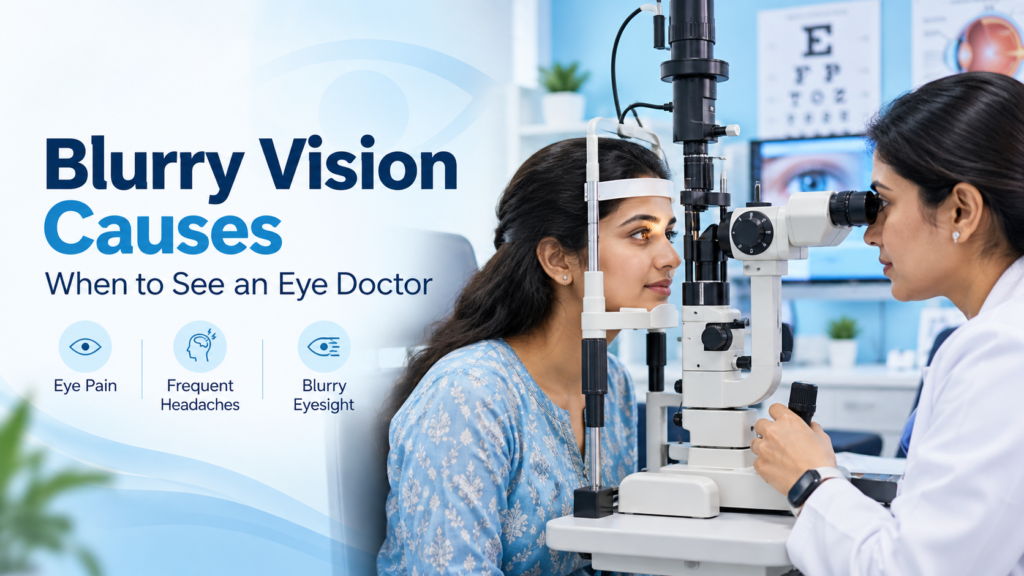
A comprehensive eye examination helps identify possible causes of blurry eyesight, eye discomfort, and changes in vision.
Depending on your symptoms and medical history, your eye doctor may recommend the following assessments.
1. Medical History and Symptom Assessment
Your doctor may ask when your blurry vision began, whether it affects one or both eyes, and whether you have associated symptoms such as headaches, eye pain, or flashes of light.
Your medical history, medications, and conditions such as diabetes are also important.
2. Visual Acuity Test
This test measures how clearly you can see letters or symbols at specific distances.
It helps identify possible vision problems and determine whether further testing is required.
3. Refraction Test
A refraction test checks for conditions such as myopia, hyperopia, and astigmatism.
It helps determine the appropriate prescription for glasses or contact lenses when needed.
4. Examination of the Eye’s Structures
An eye doctor may examine the cornea, lens, and other structures using specialized instruments.
This can help identify cataracts, inflammation, surface problems, and other abnormalities.
5. Eye Pressure Assessment
Eye pressure measurement may be included when appropriate.
This assessment can support glaucoma evaluation, although measuring eye pressure alone cannot diagnose or exclude glaucoma.
6. Retinal Examination
When indicated, your doctor may examine the retina and optic nerve, sometimes after using drops to dilate the pupils.
This can help identify conditions such as diabetic retinopathy, retinal abnormalities, and certain signs of glaucoma.
Not every patient needs every test. Your eye doctor will recommend examinations according to your symptoms and individual needs.
How Can You Take Better Care of Your Eyes?
Simple daily habits can support eye comfort and overall eye health.
Take regular screen breaks. Avoid continuously focusing on digital devices for long periods without giving your eyes a break.
Blink frequently. Conscious blinking during screen work helps maintain the tear film and may reduce dryness.
Use appropriate lighting. Avoid reading or working in poorly lit environments that increase visual discomfort.
Wear prescribed glasses. If you have a refractive error, use the vision correction recommended by your eye care professional.
Manage diabetes and other health conditions. Good control of underlying conditions is an important part of protecting long-term eye health.
Avoid self-medicating with eye drops. Some eye medications, especially steroid-containing drops, can cause complications when used without medical supervision.
Schedule eye examinations as recommended. The appropriate frequency depends on your age, symptoms, medical history, and risk factors.
These habits can help maintain eye comfort, but they cannot prevent or treat every eye disease.
When Should You Visit an Eye Specialist in Yavatmal?
Consider scheduling an eye checkup in Yavatmal if you experience recurring blurry vision, eye strain, frequent headaches associated with visual work, or gradually worsening eyesight.
An eye examination is also important if your current glasses no longer provide clear vision or if you have conditions such as diabetes that increase your risk of eye complications.
An eye specialist in Yavatmal can assess your symptoms, identify possible eye conditions, and recommend suitable next steps based on the examination findings.
Remember, many eye conditions are easier to manage when identified early, and some serious conditions may develop without obvious symptoms.
Frequently Asked Questions About Blurry Vision
1. What are the most common blurry vision causes?
Common causes include refractive errors, dry eyes, digital eye strain, and cataracts. Blurry vision may also be associated with diabetic eye disease or other eye conditions. A professional examination is needed to identify the actual cause.
2. Can too much mobile phone use cause blurry vision?
Prolonged screen use can contribute to digital eye strain and reduced blinking, which may cause temporary blurry eyesight and dry eye symptoms. Persistent vision changes should be evaluated by an eye professional.
3. Can weak eyesight cause frequent headaches?
Yes. Uncorrected refractive errors may contribute to eye strain and headaches, particularly during reading or close-up work. However, headaches can have many causes, so frequent or worsening headaches should be medically assessed.
4. Is sudden blurred vision dangerous?
Sudden blurred vision can sometimes indicate a serious eye or neurological problem. Seek emergency medical attention for sudden significant vision changes, particularly when accompanied by pain, weakness, speech difficulties, or other neurological symptoms.
5. Can blurry eyesight be corrected with glasses?
If blurry eyesight is caused by a refractive error, properly prescribed glasses or contact lenses can often improve vision. Other causes may require different treatments.
6. When should I book an eye checkup?
Book an eye examination if your vision is persistently blurry, your eyesight is gradually worsening, or you experience recurring eye discomfort. Sudden vision loss, severe eye pain, or other emergency warning signs require immediate care.
Protect Your Vision with Drushti Eye Care, Yavatmal
Clear vision plays an important role in your everyday life — from reading and working to driving and spending time with loved ones.
Blurry vision, eye pain, and frequent headaches should not be repeatedly ignored, especially when they interfere with your daily activities.
Understanding blurry vision causes and seeking timely professional advice can help you make informed decisions about your eye health.
Experiencing frequent blurry vision or eye discomfort?
Book an eye examination at Drushti Eye Care, Yavatmal, for a professional assessment and guidance on the next steps.
Drushti Eye Care – Yavatmal
Book Your Eye Checkup Today
Important: Sudden vision loss or severe eye pain requires urgent emergency medical attention. Do not delay emergency treatment while waiting for a routine appointment.
Medical Disclaimer
This article is intended for general educational and awareness purposes only. It is not a substitute for professional medical advice, diagnosis, or treatment. Always consult a qualified eye care professional for concerns about your vision or eye health.
Medical References
- National Eye Institute — Refractive Errors: https://www.nei.nih.gov/eye-health-information/eye-conditions-and-diseases/refractive-errors
- National Eye Institute — Diabetic Retinopathy: https://www.nei.nih.gov/eye-health-information/eye-conditions-and-diseases/diabetic-retinopathy
- National Eye Institute — Dilated Eye Exam: https://www.nei.nih.gov/eye-health-information/healthy-vision/finding-eye-doctor/get-dilated-eye-exam
- American Academy of Ophthalmology — Eye Symptoms: https://www.aao.org/eye-health/symptoms-list
- NHS — Eye Pain: https://www.nhs.uk/symptoms/eye-pain/
- NHS — Vision Loss: https://www.nhs.uk/conditions/vision-loss/