
Every year, the moment the first heavy rains reach Yavatmal, our waiting room fills with red, watering eyes. Monsoon eye care matters because the same humidity that cools the afternoon also helps infections spread fast, and eye flu is the most common one. It looks alarming, and it can run through a whole house in days. The reassuring part is that most cases are mild and settle on their own with simple care. Here is what to do, what to avoid, and when to actually see a doctor.
What is eye flu (conjunctivitis)?
Eye flu is the everyday name for conjunctivitis, an infection or irritation of the thin clear layer covering the white of your eye. In the monsoon it is usually viral, and sometimes bacterial. The eye turns pink or red, waters a lot, feels gritty like sand, and may stick together in the morning. One eye often catches it first, and the other follows a day or two later.
Why it spreads so fast in the rains
Conjunctivitis spreads through touch, not by simply looking at an infected person, which is an old myth worth dropping. You rub your eye, then touch a door handle, a towel or a phone, and the next person picks it up. Crowded homes, shared towels and damp weather make the monsoon its favourite season. So it is spread, not bad luck, that carries it from one family member to the next.
Simple monsoon eye care at home (the do’s)
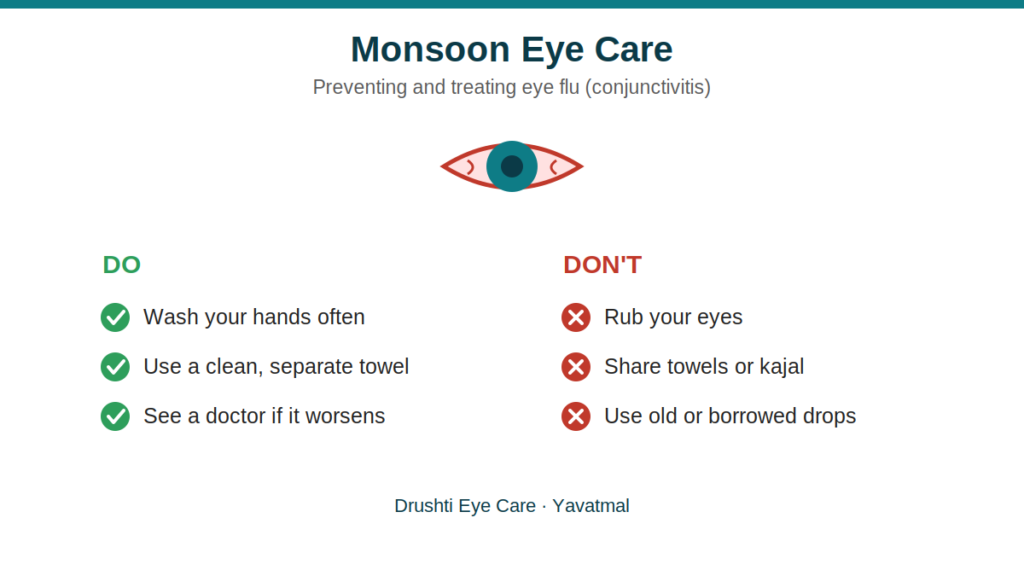
- Wash your hands often, and keep them away from your eyes.
- Use a separate, clean towel and pillow cover, and wash them daily.
- Wipe away the sticky discharge with a fresh cotton pad and cooled boiled water, then throw the pad away.
- Rest your eyes, and wear dark glasses outdoors if light bothers you.
Most viral cases ease within a week on nothing more than this.
What not to do (this part matters most)
- Do not rub your eyes, however much they itch.
- Do not share towels, pillows, kajal or eye make-up with anyone.
- Do not use leftover or borrowed eye drops, especially steroid drops.
That last point is the one we worry about. People often reach for an old bottle of drops that a relative once used. Steroid drops in the wrong hands can quietly push up your eye pressure or make an infection worse, and we see real damage from this every monsoon. When in doubt, use no drops without a doctor.
When to see a doctor
Most eye flu is harmless. A few warning signs, though, mean you should come in the same day:
- Pain inside the eye, not just irritation
- Blurred vision that does not clear when you blink
- Strong sensitivity to light
- Thick yellow-green discharge that keeps coming back
- No improvement after four or five days
Children, contact-lens users, and anyone already managing with one good eye should be more careful and get checked sooner.
Keeping your family safe
If one person at home has it, a few small habits protect everyone else. Keep their towel separate, wash your hands after any contact, and avoid sharing the same pillow. There is no need to panic, and no need to keep a child shut away for weeks. Sensible hygiene for about a week usually does the job. If you are unsure at any point, our team at Drushti Eye Care is glad to take a look.
Red, watering eyes that will not settle?
Don’t guess with an old bottle of drops. Get them checked.
Call or WhatsApp: 094229 22429
Drushti Eye Care, State Bank Chowk Rd, in front of Timber Bhavan, Dhamangaon Road, Pangari, Yavatmal, Maharashtra 445001
Frequently asked questions
How does eye flu spread?
Through touch, not by looking at someone. You rub your eye, then touch a shared surface, towel or phone, and the next person picks it up.
How long does conjunctivitis last?
Most viral cases clear in about a week. Bacterial ones often improve faster once a doctor starts the right drops.
Which eye drops should I use for red eyes?
None on your own, and never a leftover steroid drop. A doctor should confirm the cause first, and a simple lubricating drop can soothe in the meantime.
Can I go to work or school with eye flu?
It is better to rest at home for a few days while the eye waters and spreads easily, then return once it settles.
When should I see a doctor for red eyes?
The same day if you have eye pain, blurred vision, strong light sensitivity, thick discharge, or no improvement after four to five days.