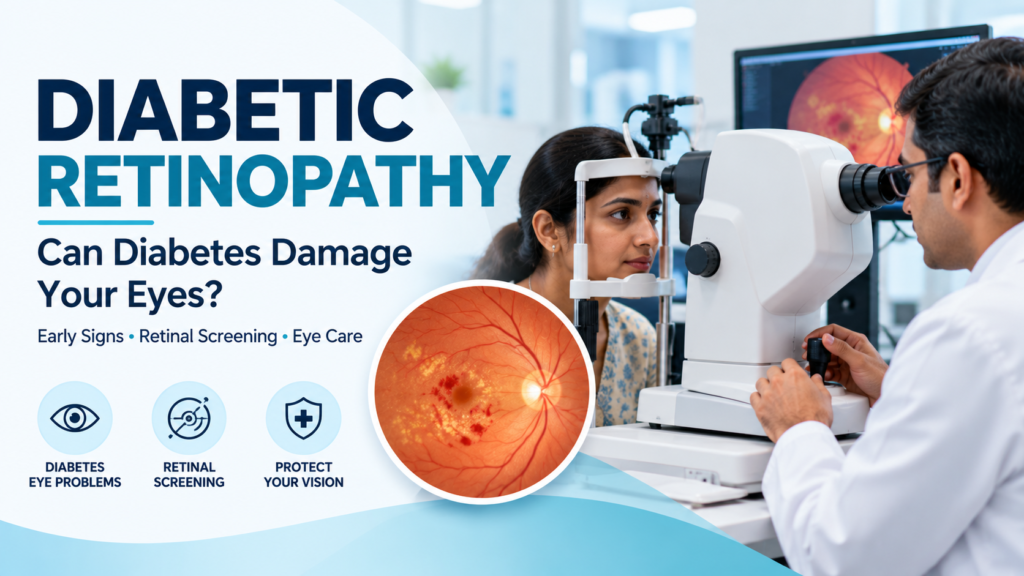
Did you know that diabetes can damage your eyes even when your eyesight seems perfectly normal?
Many people carefully monitor their blood sugar levels but forget about one important aspect of diabetes management — their eye health.
Over time, diabetes can affect the tiny blood vessels inside the eyes, leading to a condition called diabetic retinopathy. If the condition progresses without appropriate care, it can cause serious vision problems and, in some cases, permanent vision loss.
The most concerning part? Early diabetic retinopathy symptoms are often completely absent.
That means you may have healthy-looking eyes, no pain, and clear eyesight while changes are already developing in your retina.
At Drushti Eye Care, Yavatmal, we encourage people living with diabetes to understand the importance of timely retinal examinations and professional eye care.
In this article, we’ll explain how diabetes affects your eyes, the warning signs to recognize, and why regular diabetic eye checkups matter.
What Is Diabetic Retinopathy?
Diabetic retinopathy is an eye condition that affects people living with diabetes.
It occurs when prolonged high blood glucose levels damage the small blood vessels supplying the retina.
The retina is the light-sensitive layer at the back of your eye. It receives light and sends visual information to the brain, allowing you to see.
When retinal blood vessels become damaged, they may:
- Leak fluid or blood.
- Develop small areas of swelling.
- Become blocked, reducing blood supply to parts of the retina.
- Trigger the growth of abnormal new blood vessels in more advanced disease.
These changes can affect the retina’s ability to function properly and may lead to vision loss.
Both type 1 and type 2 diabetes can cause diabetic retinopathy.
Important: Diabetic retinopathy can develop without eye pain or noticeable changes in vision, making routine retinal examinations essential.
How Does Diabetes Affect Your Eyes?
High blood sugar can affect eye health in several ways.
1. Damage to Retinal Blood Vessels
Over time, elevated blood glucose levels can weaken the tiny blood vessels in the retina.
These vessels may begin leaking fluid or blood, affecting retinal health.
2. Swelling in the Central Retina
Diabetes can cause fluid accumulation in the macula, the central part of the retina responsible for detailed vision.
This condition is called diabetic macular edema (DME).
It may cause blurry or distorted central vision, making reading and recognizing faces more difficult.
3. Reduced Blood Supply
Some retinal blood vessels may become blocked, reducing the oxygen supply to parts of the retina.
In advanced stages, the eye may develop abnormal new blood vessels that can bleed or cause complications.
4. Other Diabetes-Related Eye Problems
Diabetes can also increase the risk of cataracts and certain types of glaucoma.
Not every blurry vision problem in a person with diabetes is caused by diabetic retinopathy. A comprehensive eye examination helps identify the actual cause.
Early Diabetic Retinopathy Symptoms: Warning Signs You Should Know
One of the biggest challenges with diabetic retinopathy is that the early stages usually have no obvious symptoms.
As the disease progresses, some people may experience the following changes.
1. Blurry or Fluctuating Vision
You may notice that your eyesight becomes blurry or changes from day to day.
Difficulty reading small print, looking at a mobile screen, or seeing distant objects clearly may become more noticeable.
Fluctuating blood sugar itself can also temporarily affect vision, so an eye examination is needed to identify the cause.
2. Dark Spots or Floaters
You may see tiny dark spots, threads, or cobweb-like shapes floating in your field of vision.
These are called floaters.
Sudden new floaters, particularly numerous spots or dark streaks, can indicate bleeding or another serious retinal problem and require urgent assessment.
3. Difficulty Seeing at Night
Some people experience difficulty seeing in dim lighting or while driving at night.
This may occur with diabetic eye disease, although other eye conditions can cause similar symptoms.
4. Distorted or Wavy Vision
Straight lines may appear bent or wavy, especially when the central retina is affected.
This can interfere with reading and other activities requiring detailed vision.
5. Dark or Missing Areas in Vision
Advanced retinal damage may lead to dark patches, missing areas, or significant reductions in eyesight.
These changes must not be ignored.
6. Sudden Vision Changes
Sudden blurred vision or sudden vision loss may indicate bleeding inside the eye, retinal problems, or another medical emergency.
Seek emergency eye care immediately if you develop sudden vision loss, a curtain-like shadow, flashes of light, or many new floaters.
Remember, waiting until symptoms appear can mean that retinal damage has already progressed.
Who Is at Greater Risk of Diabetic Retinopathy?
Anyone with diabetes can develop diabetic retinopathy, but some factors increase the risk.
These include:
- Living with diabetes for many years.
- Persistently elevated blood glucose levels.
- High blood pressure.
- High cholesterol.
- Existing kidney disease.
- Pregnancy in people with pre-existing diabetes.
- Previously diagnosed diabetic retinopathy.
Even if your blood sugar is currently well controlled, regular retinal examinations remain important.
Types and Stages of Diabetic Retinopathy
Diabetic retinopathy is commonly divided into two major types.
Non-Proliferative Diabetic Retinopathy (NPDR)
This is the earlier form of the condition.
Small retinal blood vessels become damaged and may leak fluid or blood.
NPDR can range from mild to severe.
Some patients have no symptoms, while others may develop vision problems, particularly if diabetic macular edema is present.
Proliferative Diabetic Retinopathy (PDR)
This is a more advanced stage.
Abnormal new blood vessels grow on the retina or into the vitreous cavity.
These fragile vessels can bleed, form scar tissue, and sometimes contribute to retinal detachment.
PDR can cause severe vision loss if not managed appropriately.
Early diagnosis and appropriate treatment can significantly reduce the risk of serious vision complications.
Why Regular Diabetic Eye Checkups Are Important
Many people believe they need an eye examination only when they start experiencing blurry vision.
However, diabetic retinopathy can develop silently.
A diabetic eye checkup allows an eye care professional to examine the retina and detect changes before significant symptoms develop.
Regular examinations help to:
- Identify early retinal damage.
- Detect diabetic macular edema.
- Monitor changes in retinal blood vessels.
- Determine whether additional testing or treatment is necessary.
- Reduce the risk of preventable vision loss through timely care.
A routine spectacle-power check alone may not be sufficient to assess diabetic retinal disease.
A dilated retinal examination or another clinically appropriate retinal assessment is important.
How Often Should People with Diabetes Get Their Eyes Checked?
The recommended schedule depends on the type of diabetes, medical history, and findings from previous eye examinations.
Type 1 Diabetes
For most adults, an initial comprehensive dilated eye examination is recommended within five years of diagnosis.
Children and adolescents require age-appropriate recommendations from their diabetes and eye care teams.
Type 2 Diabetes
A comprehensive dilated eye examination is recommended at the time of diagnosis.
This is because type 2 diabetes may have been present for some time before it was identified.
Follow-Up Examinations
Annual eye examinations are common for people with diabetes.
If repeated examinations show no retinopathy and blood sugar is well managed, the eye specialist may recommend an interval of one to two years for selected patients.
If diabetic retinopathy is present or progressing, more frequent examinations may be necessary.
Diabetes and Pregnancy
People with pre-existing type 1 or type 2 diabetes should discuss eye examinations before pregnancy and during the first trimester.
Additional monitoring may be needed during pregnancy and after delivery.
Your eye specialist should determine your personal screening schedule. Do not wait for symptoms before scheduling an examination.
What Happens During a Diabetic Retinal Eye Examination?
A comprehensive diabetic retinal examination may involve several assessments, depending on your medical history and eye findings.
1. Vision Testing
Your doctor checks how clearly you can see at different distances.
2. Dilated Retinal Examination
Special eye drops may be used to widen the pupils, allowing the eye doctor to examine the retina more thoroughly.
3. Retinal Photography
A retinal camera may be used to capture images of the back of the eye and document changes over time.
4. Optical Coherence Tomography (OCT)
When clinically indicated, OCT can produce detailed cross-sectional images of the retina and help detect swelling associated with diabetic macular edema.
5. Additional Testing
In selected cases, your doctor may recommend further imaging or assessment to evaluate retinal blood vessels and guide treatment.
Not every patient requires every test.
Your eye specialist will recommend the appropriate examinations according to your needs.
Can Diabetic Retinopathy Be Treated?
Yes. Several treatments are available for diabetic retinopathy, depending on the stage and whether complications such as diabetic macular edema are present.
1. Diabetes and Risk-Factor Management
Managing blood glucose, blood pressure, and cholesterol is essential.
These measures can help reduce the risk of developing or worsening diabetic eye disease.
2. Anti-VEGF Injections
Certain patients may benefit from medication injected into the eye to reduce abnormal blood vessel activity or retinal swelling.
3. Laser Treatment
Retinal laser treatment may be recommended for selected types of advanced diabetic retinopathy or related complications.
4. Vitrectomy Surgery
In more serious cases, surgery may be needed to manage complications such as persistent bleeding into the vitreous or certain forms of retinal detachment.
Treatment decisions depend on retinal findings, vision, and the overall health of the patient.
Treatment can often slow or prevent further damage, and some patients experience visual improvement. However, vision already lost may not always be recoverable.
How Can You Protect Your Eyes If You Have Diabetes?
Living with diabetes does not automatically mean you will lose your vision.
Taking consistent steps to manage your health can reduce the risk of serious eye complications.
Keep Blood Sugar Under Control
Follow your diabetes care plan and discuss your HbA1c targets with your treating doctor.
Manage Blood Pressure and Cholesterol
High blood pressure and cholesterol can increase the risk of retinal complications.
Attend Scheduled Eye Examinations
Don’t skip retinal examinations simply because your eyesight seems normal.
Follow Your Medication Plan
Take prescribed diabetes medications consistently and avoid changing treatment without medical advice.
Maintain Healthy Daily Habits
Physical activity, balanced nutrition, and avoiding smoking can support overall health and diabetes management.
Report Any New Vision Changes
If your vision becomes blurry, distorted, or noticeably different, arrange a medical assessment.
Sudden significant changes require urgent care.
When Should You Visit a Diabetic Eye Specialist in Yavatmal?
If you have diabetes and have never undergone a comprehensive retinal examination, consider discussing screening with an eye care professional.
You should also arrange an eye evaluation if:
- You have recently been diagnosed with type 2 diabetes.
- Your last recommended retinal examination is overdue.
- You notice persistent blurry or fluctuating eyesight.
- You have been told you have diabetic retinopathy.
- Your doctor has recommended retinal monitoring.
- You experience difficulty reading or seeing clearly.
A diabetic eye specialist in Yavatmal can help assess your retinal health and recommend further care or specialist referral when needed.
An appropriate diabetic eye checkup in Yavatmal is an important part of managing diabetes and protecting your long-term vision.
Frequently Asked Questions About Diabetic Retinopathy
1. What are the first symptoms of diabetic retinopathy?
Early diabetic retinopathy often has no noticeable symptoms. As the condition progresses, blurry vision, floaters, distorted vision, or dark areas may develop.
2. Can diabetes damage your eyes even if your sugar is controlled?
Yes. Good blood sugar management reduces risk, but it does not eliminate the possibility of diabetic eye disease. Regular retinal examinations remain important.
3. Can diabetic retinopathy cause blindness?
Advanced diabetic retinopathy can cause severe vision loss or blindness. Early detection, appropriate treatment, and ongoing diabetes management can greatly reduce this risk.
4. Is diabetic retinopathy reversible?
Some retinal changes and swelling may improve with treatment, but established damage and vision loss may not always be reversible.
5. Is a diabetic retinal examination painful?
A standard dilated retinal examination is generally not painful. Dilating drops may cause temporary stinging, blurred near vision, and sensitivity to light.
6. Can someone with type 2 diabetes develop diabetic retinopathy?
Yes. Both type 1 and type 2 diabetes can lead to diabetic retinopathy.
7. Do I need an eye checkup if my vision is normal?
Yes. Retinal damage can begin before you notice changes in eyesight. Screening is designed to detect these changes early.
8. How often should I have a diabetic retinal examination?
Many people with diabetes are examined annually, although some require more frequent monitoring and selected low-risk patients may be advised to return every one to two years. Your eye specialist will recommend the appropriate interval.
Protect Your Vision Before Symptoms Appear
Diabetes may affect your eyes silently, but timely screening can help protect your vision.
Diabetic retinopathy is a serious complication of diabetes, yet early detection and appropriate care can make a meaningful difference.
Whether you have recently been diagnosed with diabetes or have been managing it for several years, don’t overlook the importance of retinal health.
At Drushti Eye Care, Yavatmal, we encourage patients to take proactive steps toward eye health through professional evaluation and appropriate guidance.
Book a Diabetic Retinal Eye Examination
Living with diabetes? Don’t wait for blurry vision to appear.
Schedule a diabetic retinal eye examination at Drushti Eye Care, Yavatmal, to discuss your eye health, screening needs, and appropriate next steps.
Drushti Eye Care – Yavatmal
Book Your Diabetic Eye Checkup Today
Sudden vision loss, new flashes, numerous floaters, or a curtain-like shadow across your vision requires immediate emergency medical attention.
Medical Disclaimer
This article is intended for educational purposes only and does not replace professional medical advice, diagnosis, or treatment. Diabetic eye disease requires individual assessment by a qualified eye care professional. Consult your diabetes care team and ophthalmologist for personalized screening and treatment recommendations.
Medical References
- National Eye Institute — Diabetic Retinopathy: https://www.nei.nih.gov/eye-health-information/eye-conditions-and-diseases/diabetic-retinopathy
- American Diabetes Association — Standards of Care in Diabetes 2026, Retinopathy: https://doi.org/10.2337/dc26-S012
- National Institute of Diabetes and Digestive and Kidney Diseases — Diabetic Eye Disease: https://www.niddk.nih.gov/health-information/diabetes/overview/preventing-problems/diabetic-eye-disease
- NHS — Diabetic Retinopathy: https://www.nhs.uk/conditions/diabetic-retinopathy/