
Do your eyes burn after using your phone for a long time? Do they water while working on a laptop? Do your eyes feel tired, heavy, or uncomfortable by the end of the day?
If yes, you are not alone. Many students, office workers, business owners, and homemakers spend long hours looking at digital screens every day. Mobile phones, laptops, tablets, televisions, and air-conditioned indoor environments can all contribute to eye discomfort.
One of the most common reasons behind this problem is dry eyes from screen time. Many people also experience digital eye strain, which can make the eyes feel tired, irritated, or blurry after prolonged screen use.
At Drushti Eye Care, Yavatmal, we often see patients who ignore these symptoms until the discomfort begins affecting their work, studies, or daily routine. Understanding the causes and knowing when to seek help can make a big difference.
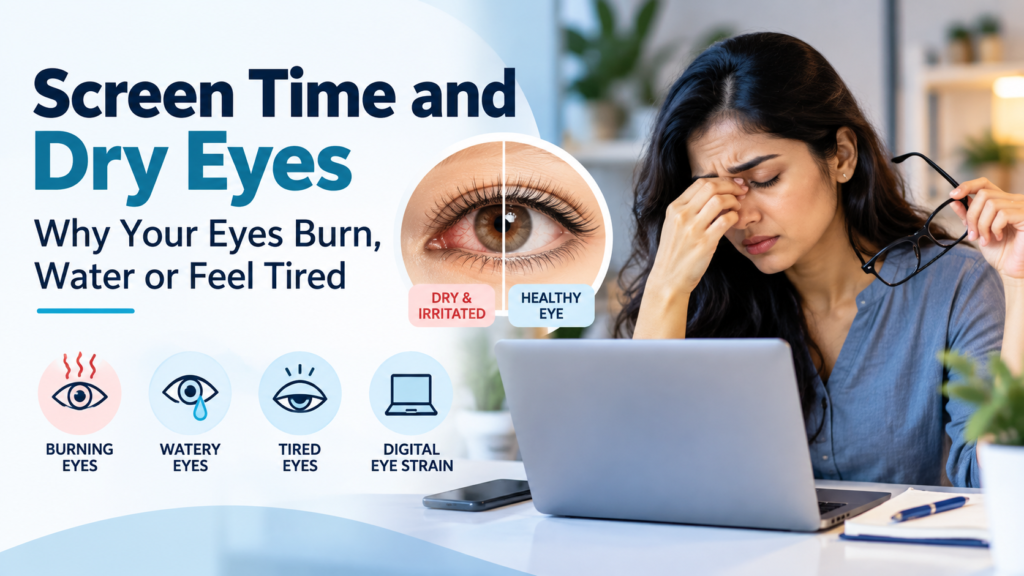
What Are Dry Eyes?
Dry eyes occur when the eyes do not produce enough tears or when the quality of tears is poor. Tears are important because they keep the surface of the eyes smooth, moist, and comfortable.
A healthy tear film helps:
- Keep the eyes lubricated
- Wash away dust and irritants
- Support clear vision
- Protect the surface of the eye
When the tear film becomes unstable, the eyes may start feeling dry, irritated, or watery. Yes, even watery eyes can be a sign of dryness. This happens because irritated eyes may produce reflex tears, but these tears do not always provide lasting lubrication.
How Screen Use Affects Blinking
One of the biggest reasons for dry eyes from screen time is reduced blinking.
Normally, we blink regularly without even thinking. Blinking spreads tears evenly across the surface of the eyes. But when we focus on a digital screen for a long time, our blink rate often decreases. Some people also blink incompletely, which means the eyelids do not fully close.
This can lead to:
- Faster tear evaporation
- Uneven tear distribution
- Dryness on the eye surface
- Burning or stinging
- Blurry or fluctuating vision
Whether you are replying to WhatsApp messages, attending online classes, designing on a computer, or watching videos late at night, long hours of screen viewing can increase strain on the eyes.
Dry Eye Symptoms vs Eye Strain
People often use the terms dry eyes and eye strain interchangeably, but they are not exactly the same.
Common dry eye symptoms
Dry eye symptoms may include:
- Burning eyes
- Stinging or irritation
- Gritty feeling, like something is in the eye
- Redness
- Watery eyes
- Light sensitivity
- Fluctuating blurry vision
- Discomfort while wearing contact lenses
Common digital eye strain symptoms
Digital eye strain, also called computer vision syndrome, may include:
- Tired or heavy eyes
- Blurry vision after screen use
- Headaches
- Difficulty focusing
- Eye fatigue
- Neck and shoulder strain from prolonged device use
Many people experience both conditions at the same time. For example, reduced blinking can contribute to dryness, while prolonged focusing can lead to tired eyes and headaches.
Why Your Eyes Burn, Water or Feel Tired
There are several reasons why screen use can make your eyes uncomfortable.
1. Reduced blinking during screen use
As mentioned earlier, focusing on a screen can reduce blinking and disturb the tear film.
2. Long uninterrupted screen sessions
Many people use phones or computers for hours without breaks. This puts continuous demand on the eyes.
3. Air conditioning and dry indoor environments
Dry air, fans, and air-conditioned rooms can cause tears to evaporate more quickly, worsening dry eye symptoms.
4. Screen glare and poor lighting
Too much glare, excessive brightness, or poor room lighting can make the eyes work harder and increase discomfort.
5. Uncorrected vision problems
If your spectacle number has changed or if you have an undiagnosed refractive error, screen work may feel even more uncomfortable.
6. Contact lens use
Some contact lens wearers may notice more dryness, especially during long working hours or screen use.
7. Age and certain health conditions
Dry eyes can also become more common with age and may be associated with certain medical conditions or medications.
Daily Habits That May Reduce Discomfort
If your symptoms are mild, a few simple changes may help reduce discomfort and improve eye comfort.
Follow the 20-20-20 rule
Every 20 minutes, look at something about 20 feet away for at least 20 seconds. This helps relax the focusing muscles of the eyes.
Blink more consciously
Try to blink fully, especially when working on a screen for long periods.
Take regular breaks
Avoid using digital devices continuously for hours. Short breaks may reduce digital eye strain.
Adjust your screen position
Keep the screen at a comfortable distance and slightly below eye level. This may help reduce eye surface exposure.
Reduce glare
Use proper lighting and adjust your screen brightness so it feels comfortable to your eyes.
Stay hydrated
General hydration supports overall health and may help some people who feel dryness.
Avoid direct air flow to the eyes
Try not to sit directly in front of a fan or air-conditioner vent.
Use prescribed glasses if needed
If you already wear glasses, make sure your prescription is current.
These steps may help reduce symptoms, but they are not a substitute for a professional eye examination if the problem continues.
When to Seek Dry Eye Evaluation
Occasional discomfort after a long day on the screen may improve with rest. But if your symptoms happen frequently, keep returning, or begin affecting your daily life, it is a good idea to get your eyes checked.
You should consider a dry eye evaluation if you have:
- Frequent burning eyes
- Repeated watering of the eyes
- Ongoing irritation or redness
- Blurry vision during or after screen use
- Eye fatigue that affects work or studies
- Difficulty using screens comfortably
- Symptoms that do not improve with rest
- Discomfort while reading or driving
- Persistent light sensitivity
A proper eye examination can help determine whether your symptoms are due to dry eye disease, digital eye strain, a refractive error, or another eye condition.
What Happens During a Dry Eye Evaluation?
When you visit an eye specialist, the examination may include:
1. Symptom discussion
Your doctor may ask about your routine, screen time, work environment, medical history, and the type of symptoms you experience.
2. Vision assessment
Your vision may be checked to identify any refractive error or change in prescription.
3. Eye surface examination
The eye doctor may examine the surface of your eyes, eyelids, and tear film using specialized instruments.
4. Tear film evaluation
Depending on your symptoms, further assessment may be done to understand the condition of your tears and the eye surface.
5. Personalized advice
Based on the findings, your eye specialist may advise suitable lifestyle changes, visual correction, lubrication support, or other treatment options as appropriate.
Not every patient needs the same treatment. That is why professional assessment is important.
Can Watery Eyes Mean Dry Eyes?
Yes, surprisingly, they can.
Many people assume that watering means the eyes are not dry. But irritated, dry eyes can trigger reflex tearing. These watery tears are often not stable enough to keep the eyes properly lubricated.
So if you have watery eyes, along with burning, irritation, or fluctuating vision, dryness may still be part of the problem.
Who Is More Likely to Experience Dry Eyes From Screen Time?
This issue is common in:
- Students attending online classes
- Office employees working on computers
- Designers, editors, and content creators
- Shop owners and professionals using billing or management screens
- Mobile users who spend long hours scrolling
- People working in air-conditioned spaces
- Contact lens users
Because digital devices are now part of daily life, both young adults and older adults may experience symptoms.
When Is It an Emergency?
Dry eye and screen-related discomfort are usually not emergencies, but some symptoms should never be ignored.
Seek urgent medical attention if you have:
- Sudden loss of vision
- Severe eye pain
- Eye injury
- Sudden redness with major pain
- Flashes of light or a curtain-like shadow in vision
- Sudden major blurring in one or both eyes
These may indicate a more serious eye condition and require immediate evaluation.
Frequently Asked Questions
1. Can screen time really cause dry eyes?
Yes. Prolonged screen use can reduce blinking and increase tear evaporation, which may contribute to dry eye symptoms.
2. Why do my eyes water if they are dry?
Dry or irritated eyes may produce reflex tears. These tears may not provide proper lubrication, so the eyes can still feel uncomfortable.
3. What is computer vision syndrome?
Computer vision syndrome refers to a group of symptoms linked to prolonged screen use, including tired eyes, headaches, blurred vision, and discomfort.
4. Are burning eyes always caused by dry eyes?
Not always. Burning eyes may also occur due to allergies, infections, environmental irritation, or other eye conditions. A proper eye examination is helpful if symptoms persist.
5. How can I reduce digital eye strain?
You can try regular breaks, the 20-20-20 rule, blinking more often, reducing glare, and getting your vision checked if symptoms continue.
6. When should I see an eye specialist?
You should see an eye specialist if your symptoms are frequent, bothersome, worsening, or affecting your routine activities.
Protect Your Eyes in the Digital Age
Screens are now part of almost every aspect of life, but eye discomfort should not become your normal.
If your eyes burn, water, feel tired, or become uncomfortable after screen use, it may be a sign that your eyes need attention. Understanding dry eyes from screen time can help you take timely steps to protect your vision and comfort.
Burning, watering or uncomfortable eyes? Schedule a dry eye evaluation at Drushti Eye Care, Yavatmal.
Early evaluation can help identify the cause and guide you toward the right care for healthier, more comfortable eyes.
Medical Disclaimer
This article is for general educational awareness only and should not be considered a substitute for professional medical advice, diagnosis, or treatment. Please consult a qualified eye specialist for any concerns related to your eyes or vision.